Resources
ADHD in the Classroom
This article discusses different ways teachers can support students with ADHD (attention-deficit/hyperactivity disorder) in the classroom. The article explains how students with ADHD experience challenges with attention, organization, time management and self regulation. This article describes several strategies teachers can use to help students with ADHD succeed in the classroom. These strategies include breaking assignments into smaller, manageable tasks, reducing possible distractions, providing feedback and using organization tools. This resource will help me in my future career as a teacher because I will most likely have students in my class who have ADHD and need support to stay focused and organized. This article reminds me that students with ADHD may need additional support in the classroom to succeed and shouldn’t be disciplined for behaviours they cannot control. I can use techniques and classroom management skills from this article to create an inclusive classroom environment where students with ADHD do not feel limited but feel understood.

Center’s for Disease Control and Prevention. (n.d.). ADHD in the classroom. Centers for Disease Control and Prevention. https://www.cdc.gov/adhd/treatment/classroom.html
Setting Boundaries: How to Support a Child with Oppositional Defiance Disorder
This article discusses ODD (Oppositional Defiant Disorder) and explains how it can affect a child’s behaviour and experiences at school. Common behaviours associated with ODD include frequent arguing, blaming others for their mistakes, intentionally annoying others and temper tantrums. This article provides educators with ways to help students with ODD in the classroom. These behaviours include using positive reinforcement, offering closed choices and avoiding unnecessary power struggles in the classroom. This article can help me as teacher if I have a student who struggles with ODD. I can use these strategies to make the child feel comfortable in class and also prevent outbursts from happening. For example if I have student with ODD who refuses to complete assignment I can offer them a choice on ways to complete the assignment, provide positive encouragement and display clear classroom expectations.
Setting boundaries: How to support a child with oppositional Defiance disorder. Ontario Psychological Association – Setting Boundaries: How to Support a Child with Oppositional Defiance Disorder. (n.d.). https://www.psych.on.ca/Public/Blog/2023/Shades-of-Blue-How-Different-Types-of-Depressi-(3)
Effective Behaviour Management for Students with LDs and Behavioural Disorders
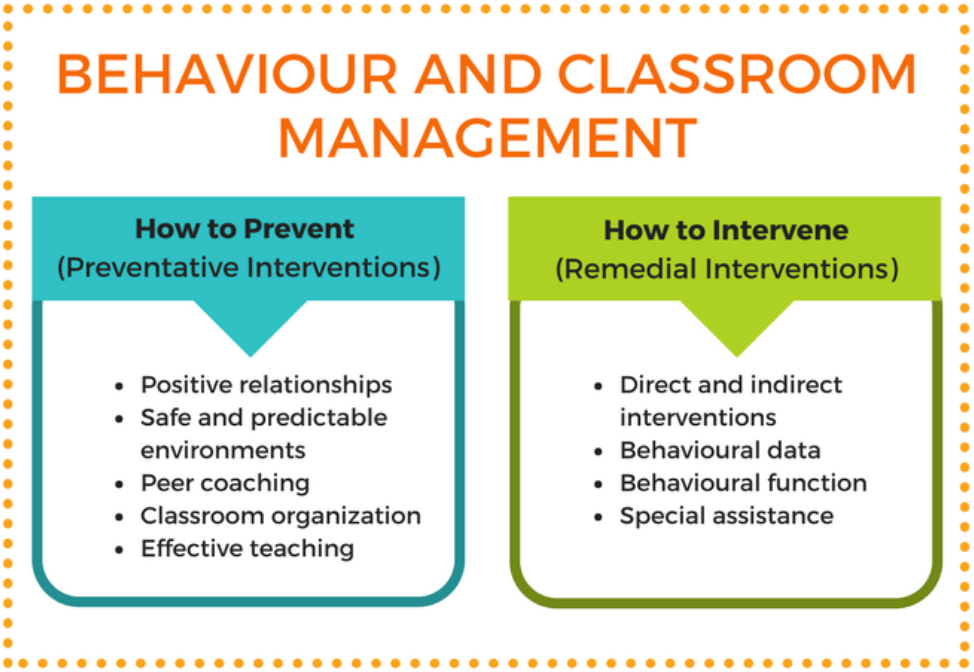
This article discusses effective behaviour management strategies for students with learning disabilities and behavioural disorders. The article emphasizes the importance of trying to prevent challenging behaviours before they happen instead of reacting once the challenging behaviour has already arose. Suggested strategies include building positive relationships with students, creating clear classroom expectations, creating a structured and predictable environment and giving students positive reinforcement. This article specifically highlights preventative interventions teachers can use in the classroom.
Teachers can
- Build positive relationships with students
- Create a safe, orderly, predictable and positive environment
- coach and supervise students on a continual basis
- organize classroom
- use effective teaching strategies
The article also provides a visual behaviour and classroom management diagram. I can hang this visual in my classroom to remind me how to prevent challenging behaviours and how to intervene them. Having this in my classroom will always make sure I am equipped to descale a situation and prevent challenging behaviour from happening
Effective behaviour management for students with LDS and behavioural disorders – LD@School. Effective Behaviour Management for Students with LDs and Behavioural Disorders. (n.d.). https://www.ldatschool.ca/behaviour-managementlds/
Videos
Childhood Behaviour Disorders Demystified: Diagnosis and Treatment
This video provides an overview of common childhood behavioural disorders and explains how they can affects a child’s social, emotional and academic development. The video discusses several conditions such as ADHD, oppositional defiant disorder, conduct disorder and Autism Spectrum Disorder. The video explains characteristics associated with each condition and how to recognize symptoms early on. It also highlights different intervention strategies such as behavioural therapy, IEPs (individualized education plans), parent training and classroom accommodations. I believe this resource is valuable for my future career as a teacher because I will work with students who have different needs and it is important I understand how to best support these different conditions in the classroom. This video reminds me that behavioural challenges should be met with patience and understanding rather than assuming a student is “difficult”. By recognizing that each student has individual needs and may require different kinds of support I can create an inclusive classroom where all students can succeed.
Understanding and Supporting Your Student With ADHD
This YouTube video shows that ADHD is not the same for every student, it shows in different ways. Some students may struggle more with attention while others struggle with hyperactivity and impulsivity. This video gives teacher recommendations to how they can support students with ADHD. These suggestions include, allowing movement times, fidget tools, breaking larger assignments into smaller tasks and using agendas to stay organized. This video also emphasizes the importance of asking students how they learn best and finding strategies that have worked for them in the past.
Why Stimulants Help ADHD
In this video Hank Green explains the science behind stimulant medication which is commonly used to help ADHD. This video breaks down the benefits of stimulant medication and why is may be worth it for someone with ADHD to take them. Green explains how stimulant medication changes the chemistry of the brain by allowing the brain to counteract the differences that cause executive functioning challenges. After watching this video I understand the benefits of taking ADHD medication and why students, teachers and parents may be inclined to use it to help ADHD symptoms. Before watching this video I was apprehensive about children taking medications such as stimulants but this video helped me understand that students can truly benefit from this medication allowing them to have a better experience in the classroom.
Strategies
Exercise and Movement
This article from Bedfordshire Community Health services discusses the importance of exercise and movement for neurodivergent children. The article explains how physical activity can support emotional regulation, improve focus, reduce hyperactivity and build self esteem, all areas where a neurodivergent child may structure. Suggested integration of exercise in the classroom could look like a 5 minute dance break between activities, wobble cushions on students chairs or providing sensory toys for students to use. As a future teacher I want to make sure I incoreprate movement breaks for my class as I now know they are beneficial for all students. Providing an outlet where neurodivergent students can use their energy would help them focus better in the classroom

NHS. (n.d.). Exercise and movement for neurodivergent children and young people. NHS choices. https://bedslutonchildrenshealth.nhs.uk/neurodiversity-support/a-whole-person-approach/exercise-and-movement-for-neurodivergent-children-and-young-people/
Homework Journal
Homework journals are a strategy to help students with ADHD organize their schoolwork. A homework journal should be used to keep track of students assignments, one side can have completed assignments where a student can have some positive reinforcement seeing the work they have finished. The other side of the journal should have upcoming assignments that still need to be completed. A homework journal bridges the gap between school and home, allowing parents to know what assignments are coming up for their child. I think this a great strategy to use for all students but especially those with organizational deficiencies.

Sensory Toys
Sensory Toys can be helpful for neurodivergent students because they provide an outlet for students to manage there sensory needs, regulate emotions and improve concentration. This article dives into the science behind different kinds of sensory toys and how different types of behavioural disorders can benefit from different kinds of sensory toys. The article describes six types of sensory tools; fidget tools, weighted products, oral motor tools, tactile tools, proprioceptive tools, vestibular tools and visual sensory tools. All of which have various benefits that can help students with different needs. In my future classroom I want to provide different kinds of sensory toys so all students can have an outlet and opportunity to regulate their emotions and improve concentration.
The Neurodiversity Directory CIC. (2026, November 3). Sensory toys: What they are and how to choose, for All Ages. The Neurodiversity Directory. https://neurodiversity.directory/guides/sensory-toys-neurodivergent-all-ages/#the-main-categories-of-sensory-toys-and-what-each-is-for


Leave a Reply